Who built this
One person.
A dog. A notebook.
adhdmind is not a startup. It's Paul, in Dorset, building small calm tools for brains that catch everything and lose half of it.
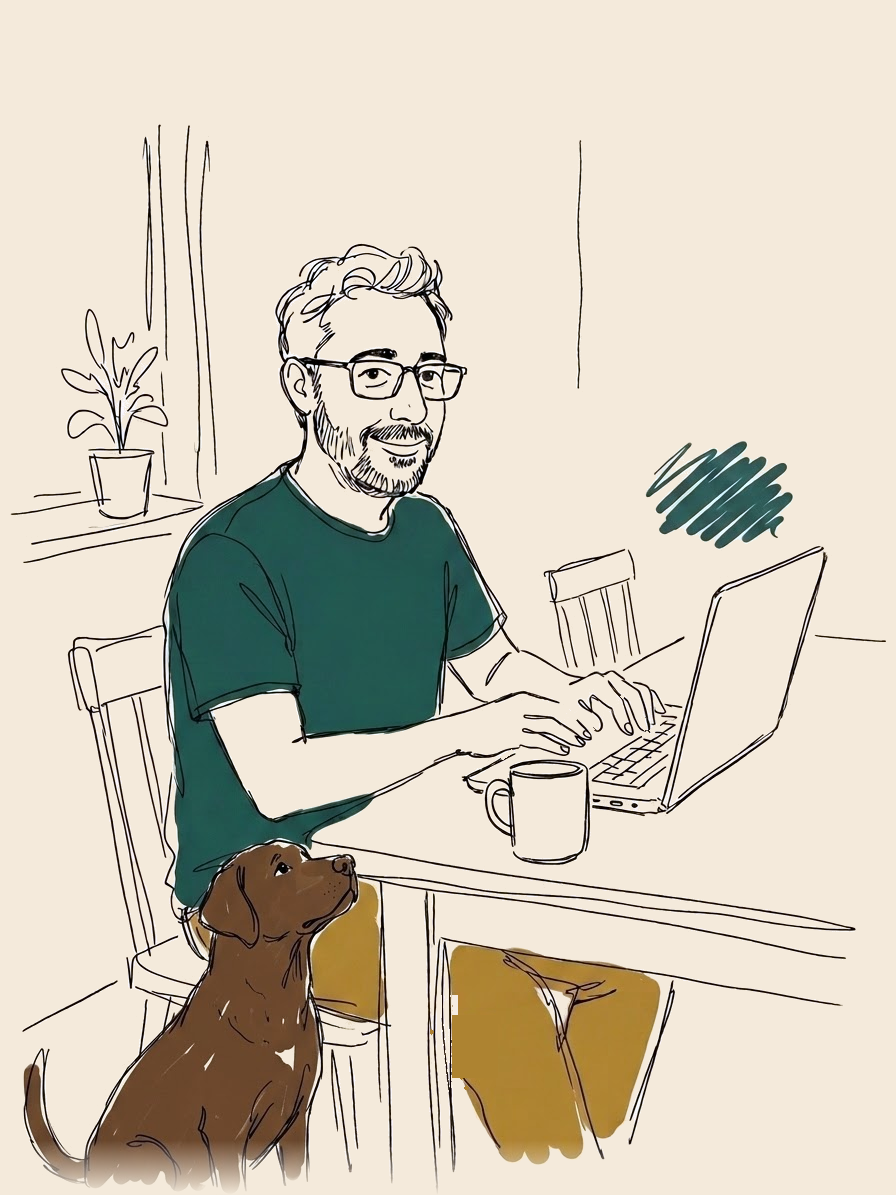
This is a hobby. It gets built in evenings and at weekends, alongside a full-time job that has nothing to do with any of it.
How it started
Two dates I'd known about for months
Two dates, both in my calendar, both known about for months: results day for one of my children, and a holiday my wife and I had booked with another. I never put them side by side until about a week after the tickets were paid for, and they weren't the kind you can move.
So we didn't go. I was there on the morning that mattered, which was the right call and the only one available. It cost us £600 to be somewhere I could have been for nothing, if I had looked at two dates together six weeks earlier.
I wrote it up at one in the morning and posted it in an ADHD forum, mostly to get the annoyance out of my system.
I had been building something completely unrelated at the time. It went on hold the next morning, and it is still on hold.
The problem was never that I didn't know. It was that February's version of July weighed nothing at all.
Why the tools look like this
Built by someone who needed them
Every decision in these apps comes from a specific failure of my own.
No accounts, because I have lost access to my own airline app at the gate and my own notes app before a meeting that mattered. A notebook you can't open is worse than no notebook.
No subscription, because a tool that quietly bills you forever for holding your own thoughts is not on your side.
Nothing on a server, because these are the notes you'd write on the back of your hand.
Nothing imports, because everything else already pushes at you and I wanted one place that doesn't.
No shame anywhere, because I have had enough of that from software, and from myself.
less to carry. more room to live.
Being straight about it
What I'm not
- Not a clinician. Nothing here is medical advice or a diagnosis. The research page shows its sources and says where the evidence is thin.
- Not formally diagnosed. A long waiting list, and a lifetime of the same evidence. I write "brains like ours" because that's what I can honestly say.
- Not a team. One person, at a kitchen table, alongside a full-time job. Support replies come from me.
- Not venture funded. No investors, no growth targets, nobody to please but the people who buy it.
The plan
Four small tools, not one big one
see it all is the first. Three more follow, each solving exactly one awkward little problem: the remembering, the resisting, the noticing, the forgetting-what-went-right.
They will never merge into a suite. The whole point is that each one stays small enough to open without dread.